
Finding Legitimate Free Accounts Beyond Platform Search
OnlyFans does not offer a searchable directory, so finding legitimate free accounts means leaving the platform and using external tools. The site has no discovery feed, no category browser, and no public search bar, which is why every free page you find will come from somewhere else. This guide explains the external channels that work, how to verify each one, and which safety checks to run before you spend anything. BestOnlyFans refreshes its rankings every month.
Understanding this gap is the first step. Once you know why discovery happens off-platform, the rest of the process becomes a set of repeatable verification habits. The BestOnlyFans method stays consistent across updates.

Why OnlyFans Lacks Native Discovery Tools
The platform was built as a subscription tool, not a marketplace. Creators bring their own audience from social media, and the site simply hosts the paid relationship. There is no feed that shows you new accounts, no tag system, and no recommendation engine.
This design choice has consequences. A creator with a free page has no way to be found by strangers inside OnlyFans itself. You can only reach a page if someone gives you the link. That is why ranking sites, subreddits, and link lists exist at all.

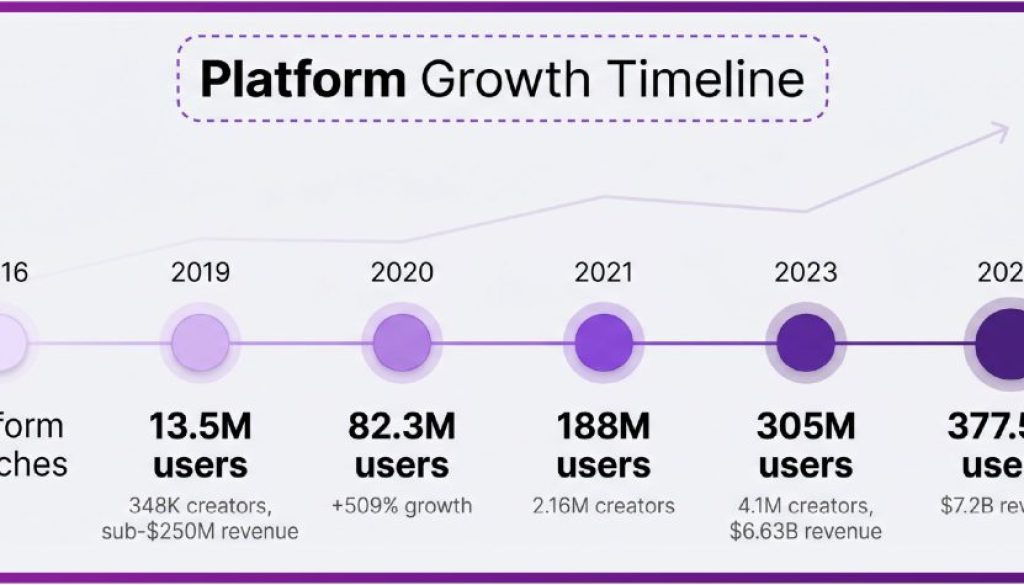
Growth figures explain the pressure behind this gap. As the user base expanded, the number of creators grew faster than any internal curation could handle. External directories emerged to fill a demand the platform never intended to serve.

Because there is no official index, every external list is a third-party interpretation. None of them have an API connection to OnlyFans. They watch public signals and publish what they find.
External Directory Methodologies and Data Sources
Ranking sites collect information in three main ways: manual review, volunteer submissions, and observation of public creator activity. A typical directory checks whether a page is free by opening the link and reading the subscription button. That is the only reliable test.
Price history is harder. A directory can only record what it saw on a given date. If a creator switched from a $4.99 base to a $0 free page last week, the listing updates only when a human or bot revisits it.

The table below summarises what external directories actually track and where each data type breaks down.
| Data Type | Collection Method | Accuracy Limitations | Best Use Case |
|---|---|---|---|
| Price history | Manual checks plus archived screenshots | Misses mid-week changes and promotions | Estimating typical paid range of $4.99-$15 |
| Availability status | Direct link test by editor | Free pages can switch to paid without notice | Confirming a page is currently $0 before you click |
| Content category tags | Human review of public descriptions | Tags are editorial, not creator-supplied | Filtering a long list down to a shortlist |
| Activity metrics | Post counts and public engagement snapshots | No access to private subscriber data | Judging whether a page is actively maintained |
None of these methods produce certainty. They produce probability. Treat every listing as a lead, not a fact, and verify before you subscribe.
Community-Based Discovery Through Reddit and Forums
Discussion communities are the second major discovery channel. Subreddits dedicated to creator promotion often require accounts to meet minimum age and karma thresholds before posting. That single rule filters out a large share of throwaway scam profiles.
Moderation transparency matters more than list length. A well-run community publishes its removal reasons and responds to reports. A poorly run one lets promotional spam sit untouched for weeks.
- Account age requirements that block brand-new profiles
- Karma thresholds that demand real posting history
- Comment verification chains where users confirm a link works
- Moderation transparency with visible removal logs
- Dispute resolution visibility when a recommendation turns out to be fake
Comment verification chains are the most useful signal. When several unrelated users confirm that a free page is genuine, the probability of a scam drops sharply. One comment proves nothing.
Community recommendations still need independent checks. A verified account can be hacked, and a legitimate page can be impersonated by a copycat profile with a similar handle.
Cross-Platform Verification Techniques
The strongest confirmation comes from correlation across platforms. A genuine creator usually maintains the same username on Twitter, Instagram, and other networks, and links back to the paid page from a bio.
Look for consistency in five places. Mismatches in two or more are a warning sign that the page you found is not the one the creator actually runs.
- Username consistency across every linked profile
- Bio link verification pointing to the same destination
- Content style alignment in public previews
- Posting schedule synchronisation between platforms
- Engagement pattern legitimacy, meaning comments from real accounts
Reverse image search is the quickest single test. If a profile photo appears on unrelated websites or stock libraries, the account is not what it claims to be.

Safety Protocols for External Discovery Channels
Impersonation is the main risk in external discovery. A fake profile copies a real creator’s photos, uses a near-identical handle, and redirects payments to a wallet the creator does not control.
Tip: before subscribing to any free page found through an external list, open the creator’s official social profile and follow the link from there instead. That path bypasses the directory entirely and confirms the destination.
Run the following five checks in order. Each one is quick, and together they screen out most fraudulent pages.
- Reverse image search the profile photo and preview images
- Check username consistency across every linked platform
- Confirm posting patterns match the creator’s public history
- Verify the payment page domain before entering card details
- Cross-check the account against community references and reports
Payment pages deserve special attention. Legitimate subscriptions process through the platform’s own checkout. Anything that asks you to send funds directly to a personal account is not a subscription.
Keep the underlying mechanics in mind: account takeover and phishing follow the same patterns everywhere. The phishing tactics used against email accounts work just as well against subscription profiles, and the warning signs are identical.
Comparing Discovery Method Reliability
No single channel is perfect. The table below compares the five main routes by how deeply they verify a creator, how often listings change, and the relative risk each carries.
| Discovery Channel | Verification Depth | Update Frequency | Relative Risk Level |
|---|---|---|---|
| BestOnlyFans rankings | Moderate, editor-reviewed listings | Weekly to monthly | Low to moderate |
| Reddit communities | High, community-confirmed links | Daily in active threads | Low |
| Twitter discovery | Low, self-promoted links | Continuous | Moderate to high |
| Instagram links | Moderate, bio link checks | Continuous | Moderate |
| Direct creator websites | High, creator-controlled | As updated by owner | Low |
Notice the pattern. Channels with human review or community confirmation score better than open promotional feeds. Speed and safety trade off against each other.
If you plan to manage discovery at any scale, structured research pays off. A free onlyfans management course covers how to organise creator research without relying on guesswork.
Managing Privacy During Multi-Platform Research
Every external directory you visit leaves a trace. Cookies, fingerprinting scripts, and analytics tools link your sessions together unless you separate them deliberately.
Compartmentalisation is the practical answer. Keep research activity in a browser profile that holds no personal logins, and use a separate email address for any account you create along the way.
- Dedicated email addresses for each research context
- Browser compartmentalisation with separate profiles
- VPN usage on public or shared networks
- Cookie clearing protocols after each session
- Payment method isolation, never a primary card
Payment isolation matters most. Use a card with a low limit or a virtual number for subscriptions, and keep your main account out of the process entirely.
Recognizing Data Decay in Ranking Information
External lists age quickly. A directory entry that was accurate in January may be misleading by March, especially for pricing and availability.
Five signals tell you a listing has gone stale. When you spot two or more on the same entry, treat the whole page as unverified.
- Missing recent posts in the public preview
- Outdated price listings that contradict the live page
- Broken external links to social profiles
- Inactive social media references with no posts for months
- Inconsistent creator descriptions between sources
Pricing changes are the clearest example. A creator can raise a base price from $4.99 to $9.99, and when that happens auto-renew stops for existing subscribers while access continues until the paid period ends. Long-standing renewals are often still on a lower rate than the current listing shows.
Promotional pricing adds another layer. A first month at $3 is common and legitimate, but the base rate after the promotion cannot fall below $4.99. If a listing shows a permanent price under that floor, it is wrong.

FAQ
Why can’t I search for free OnlyFans accounts on the platform itself?
OnlyFans has no built-in discovery feed, directory, or search bar. The platform was designed for creators to bring their own audience, so there is no mechanism for strangers to browse pages. Every free account you find will come through an external link, a community recommendation, or a ranking site.
How do external sites know which OnlyFans pages are currently free?
They check manually or through scheduled link tests. An editor opens the page and reads the subscription button to confirm whether it shows $0 or a paid rate. No external site has API access, so every listing reflects a snapshot rather than a live status.
What red flags indicate a fake or impersonator free account?
Watch for profile photos that appear in reverse image searches, usernames that differ slightly from the creator’s known handle, brand-new social profiles with no posting history, and payment requests sent directly to a personal account instead of the platform checkout. Two or more of these together indicate a fake.
How often do free OnlyFans pages change their pricing status?
There is no fixed schedule. Some creators keep a free page for years while earning through pay-per-view messages and tips. Others switch to a paid base between $4.99 and $49.99 as their audience grows. Because changes happen without notice, verify the live page before subscribing rather than trusting a listing date.